Last updated: May 2, 2026
Blown-In in Spring Valley, CA.
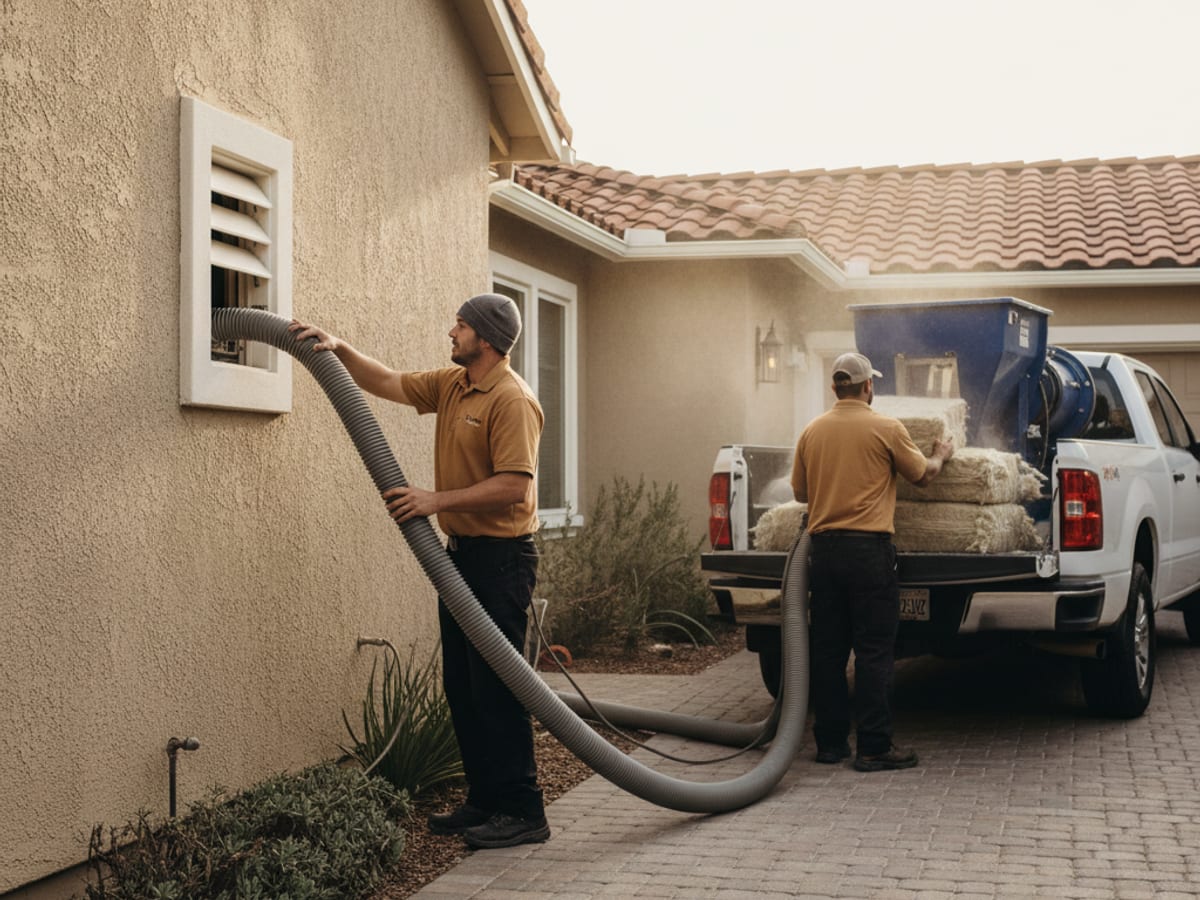
Blown-In for Spring Valley homes, done by a vetted local insulation crew. Blown-in is the workhorse for retrofits. Cellulose or fiberglass loose-fill goes into attics fast and cheap.
Why is blown-in different in East County San Diego?
East County blown-in attics are where this service earns its keep. Going from settled R-13 to R-49 cellulose plus air-sealing is the highest-impact upgrade most El Cajon, Santee, and Lakeside homes can do.
What's included in blown-in in Spring Valley?
- Cellulose or fiberglass loose-fill for attics
- Dense-pack cellulose for closed wall cavities (drill-and-fill)
- Blowers sized for proper density and reach
- Pre-blow air sealing of penetrations
- Baffle installation at eaves to protect soffit vents
- Depth markers on rafters for inspection verification
- Cleanup and HEPA vacuum of the work area
When does a Spring Valley home need blown-in?
- Existing attic is under R-19 and you want to top up
- You bought an older home with no wall insulation
- You hear a clear difference between rooms on opposite sides of the house
- You are doing a stucco redo and can pull a few cores for dense-pack
- You want a budget alternative to spray foam
What do Spring Valley homeowners ask about blown-in?
How soon can you schedule blown-in in Spring Valley?
Call and we connect you with a pro who covers Spring Valley. That pro confirms their own timing and availability, including for rodent or water damage cleanup.
What does blown-in cost in Spring Valley?
Cost depends on attic or wall size, access, the material and the condition of what is there now. The pro we connect you with quotes after seeing the home.
How does Spring Valley's climate affect this service?
Spring Valley is older working-class East County with median home age around 55 years, diverse population, original underperforming attic insulation across most addresses, inland heat that hits 95-105 degrees, and SDG&E fire-zone designation in the hillside neighborhoods. Strong attic upgrade ROI math on most projects.. East County blown-in attics are where this service earns its keep.
Cellulose or fiberglass, which is better?
Cellulose has higher R per inch, better air-flow resistance, and is recycled paper treated for fire and pests. Fiberglass is non-organic, lighter, and easier in damp climates. In dry, mild San Diego the pro uses cellulose more often unless the attic has past moisture issues.
What is dense-pack?
Dense-pack is cellulose installed at 3.5 lb/cu ft into closed wall cavities through small drilled holes. The high density resists settling, plugs air leaks, and adds R-13 to R-15 to a wall that previously had nothing. The pro patches and texture before paint.
Need blown-in in Spring Valley?
Call and we connect you with a local pro who quotes after seeing the home.